






Sign up today and see the results for yourself!
Want to speed up your verification process?
Share a screenshot of your ad revenue from the past 3 months.


The Media Rating Council (MRC) recently finalized its Digital Advertising Auction Transparency Standards. While this might sound like another technical update, it represents a seismic shift in how over $550 billion in global programmatic spend is managed. For some vendors, it is a reason to sweat. For publishers, it is the transparency they have been demanding for a decade.
As MonetizeMore’s CEO Kean Graham points out, the industry is reacting strongly because forcing platforms to disclose how their auctions actually work exposes years of creative accounting. Many Supply-Side Platforms (SSPs) have claimed to be first-price transparent while secretly running modified second-price auctions.
These platforms have been caught setting inconsistent floor prices for different buyers to manipulate outcomes or prioritizing specific demand sources even when a competitor submits a higher bid. In short, the term fair auction has lost its meaning in a sea of hidden mechanics.
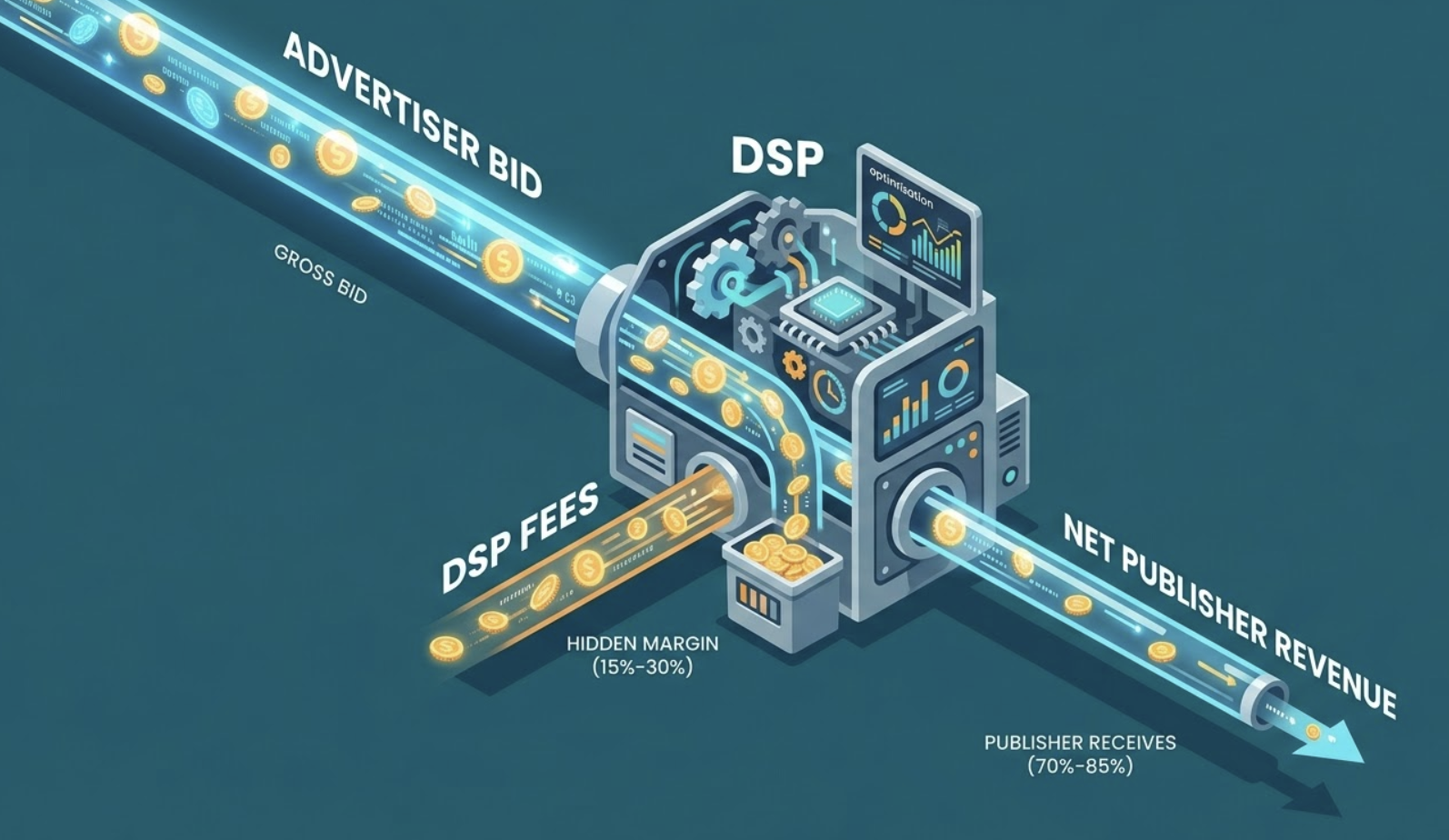
The new MRC standards create a baseline for disclosure by requiring auctioneers to report on how winners are determined and how prices are set. This is a critical move considering that current estimates suggest publishers lose an estimated 15% to 30% of potential revenue to opaque auction mechanics. When SSPs set different floors for different buyers, they are optimizing for their own margins instead of yours.
Industry data support the need for this shift:
Meanwhile, platforms that built their margins on auction secrets are facing a choice: adopt these standards and watch their take-rates compress, or skip certification and watch publishers leave. A transparent auction allows publishers to optimize. You cannot improve what you cannot see.
Under the new MRC guidelines, platforms must pull back the curtain on:
The publishers making 7-figures with MonetizeMore already demanded this level of transparency. Now, the MRC is forcing everyone else to catch up. Use this checklist to audit your partners today:
As Kean Graham says, the smart money is moving away from hidden agendas. If your current partners cannot or will not explain exactly how your money is being made, they are optimizing for themselves, not you.
Don’t let opaque mechanics eat 30-50% of your revenue. Join 2000+ publishers who demand total transparency and maximum yield.
Not necessarily. Transparency does not always equal an instant price hike. However, it does expose hidden takes. In the long run, as buyers gain confidence that their high bids actually win, we expect to see more aggressive bidding and more efficient spend reaching the publisher.
The MRC standards are part of a voluntary accreditation audit. Ask your representative for their MRC Accreditation status specifically regarding Auction Transparency. If they provide vague timelines, it is a red flag that their auction mechanics might not be as clean as they claim.
The MRC requires publishers to segment and disclose traffic sourced through third parties. This protects you from being penalized by buyers looking for organic engagement. By being transparent, you can defend premium CPMs for your high-value audiences.

Kean Graham is the CEO and founder of MonetizeMore & a pioneer in the Adtech Industry. He is the resident expert in Ad Optimization, covering areas like Adsense Optimization,GAM Management, and third-party ad network partnerships. Kean believes in the supremacy of direct publisher deals and holistic optimization as keys to effective and consistent ad revenue increases.

![What are the best ways to optimize Video Earnings [2022]](https://www.monetizemore.com/wp-content/uploads/2021/12/What-are-the-best-ways-to-optimize-Video-Earnings-2022.jpeg)
10X your ad revenue with our award-winning solutions.