AI isn’t just another tech buzzword; it’s rapidly evolving into two distinct technological paths that revolutionize how publishers and app developers approach monetization. Understanding the nuances between these AI types isn’t just academic; it directly impacts your bottom line and competitive advantage in the increasingly crowded digital advertising marketplace.
Let’s dive deep into how these technologies differ and, more importantly, how they can transform your ad revenue strategies:
Generative AI: The Creative Powerhouse Behind Content and Creatives
Generative AI operates as a stateless, prompt-based system that doesn’t maintain memory of past interactions. This technology has become ubiquitous in digital publishing over the past 18 months, but many publishers aren’t leveraging its full potential for ad optimization.
How Generative AI Works in Publishing:
- Single-model architecture that processes inputs and generates outputs without persistent memory
- Prompt-based interaction requiring specific instructions for each new task
- Standalone task execution without complex goal planning or execution.
Practical Applications for Publishers and App Developers
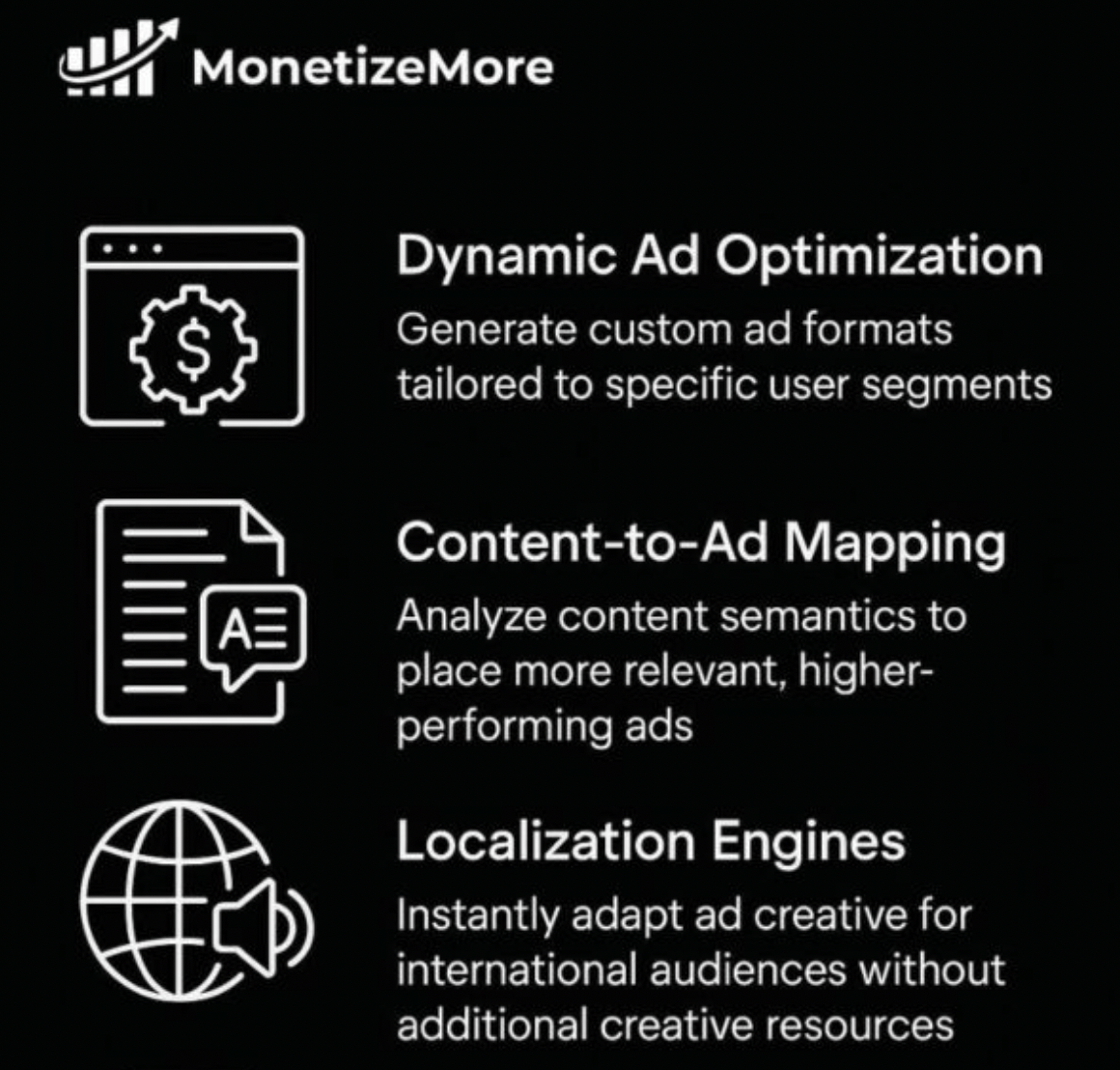
- Dynamic Ad Optimization: Generate custom ad formats tailored to specific user segments
- Content-to-Ad Mapping: Analyze content semantics to place more relevant, higher-performing ads
- Localization Engines: Instantly adapt ad creative for international audiences without additional creative resources
- Ad Format Innovation: Transform existing creatives into emerging formats like native, interstitial, or rewarded video.
The Revenue Impact
Publishers implementing generative AI for ad optimization have seen CTR improvements ranging from 27-43% in recent industry benchmarks. This translates directly to higher CPMs and improved fill rates across programmatic channels.
The Limitations That Cost You Money
Despite its strengths, generative AI presents significant challenges for publishers:
- Hallucination issues that can create compliance risks in regulated advertising categories
- Brittle prompt engineering requiring constant refinement and expertise
- Contextual blindness that limits understanding of broader campaign performance
- No true reasoning capabilities for complex ad optimization decisions
- Session amnesia preventing learning from historical ad performance patterns.
Agentic AI: Your Autonomous Revenue Navigator
Agentic AI represents the next evolution in advertising intelligence, autonomous systems that don’t just respond but proactively manage your monetization strategy. Think of it as having a dedicated ad operations team working 24/7 with perfect memory and coordination.
How Agentic AI Transforms Publisher Operations:
- Multi-agent orchestration layers coordinating various specialized AI components
- Persistent memory buffers maintaining context across ad operations
- Feedback loops that continuously optimize based on real-time performance
- Role-switching capabilities adapting to different monetization challenges.
Revenue Applications Transforming Publisher Economics
- Dynamic Floor Price Optimization: Agents that continuously adjust price floors based on historical performance, demand patterns, and seasonal trends
- Automated Demand Path Analysis: Identifying and eliminating inefficient supply paths that leak revenue
- Header Bidding Intelligence: Optimizing timeout settings, adapter sequencing, and wrapper configuration in real-time
- Audience Segment Evolution: Creating and testing new audience segments based on changing user behaviors
- Competitive Intelligence Monitoring: Tracking competitor ad strategies and recommending tactical adjustments
- Yield Management Automation: End-to-end management of waterfall strategies across all demand sources.
The Competitive Edge in Numbers
Early adopters of agentic AI systems in publishing report average revenue lifts of 34% compared to traditional ad operations approaches. More impressively, these systems reduce operational overhead by automating complex tasks that typically require specialized adtech talent.
The Integration Challenges
Despite its promise, agentic AI presents implementation hurdles:
- Infrastructure complexity requiring more sophisticated technical resources
- Coordination breakdowns between multiple agents that can disrupt revenue flows
- Transparency limitations creating “black box” decision processes
- Integration challenges with legacy ad tech stacks
- Data governance considerations for publishers with strict privacy requirements.
AI Strategy ROI Comparison: When to Choose Generative vs. Agentic AI
| When Generative AI Delivers Better ROI |
When Agentic AI Becomes the Revenue Driver |
| Content-heavy publishers with diverse editorial themes needing contextual ad matching |
Enterprise publishers with complex ad stacks and multiple demand partners |
| Direct sales organizations requiring frequent creative production and variation |
Programmatic-first businesses requiring constant yield optimization |
| Publishers with limited technical resources but strong editorial capabilities |
Publishers with first-party data strategies needing sophisticated audience targeting |
| Mobile app developers focused on creative optimization for in-app placements |
Ad networks and SSPs managing thousands of publisher relationships |
| Publishers entering new markets requiring rapid content and ad localization. |
App developers with hybrid monetization models balancing ads with subscriptions or in-app purchases. |
The Hybrid Approach: Best of Both Worlds
Leading publishers are discovering that combining both AI approaches creates powerful synergies:
- Generative AI creates and optimizes the creative assets and content
- Agentic AI handles the strategic deployment, pricing, and performance optimization
- Together, they form a complete revenue optimization system that addresses supply and demand challenges.
Future-Proofing Your Ad Stack
As we move through the next quarter, several emerging trends will shape AI-powered programmatic advertising, including:
- Predictive Monetization: AI systems that forecast revenue opportunities before they emerge
- Autonomous Negotiation: AI agents that negotiate directly with demand partners
- Creative Intelligence: Systems that understand which visual and textual elements drive performance
- Regulatory Adaptation: AI that navigates the increasingly complex privacy landscape
- Cross-Publisher Collaboration: Shared AI systems that leverage collective intelligence across multiple properties.
Measuring Success: The New KPIs of AI-Powered Publishing
Traditional metrics don’t fully capture the impact of AI on publishing operations. Forward-thinking organizations are adopting new performance indicators:
- Revenue Per AI Dollar (RPAID): Measuring direct revenue attributable to AI investments
- Decision Velocity: How quickly your operations can adapt to changing market conditions
- Creative Efficiency Index: Measuring the performance spread across AI-generated creative variations
- Automation Coverage Ratio: Percentage of ad operations decisions handled autonomously
- AI Arbitrage Value: Revenue gained from AI-identified pricing inefficiencies.
Conclusion: Strategic Positions for 2025 and Beyond
The question isn’t whether to adopt AI in your publishing operations; it’s which type of AI will drive your competitive advantage. The publishers, seeing the most significant revenue growth, are taking strategic positions:
- Generative AI excellence for publishers competing on content quality and creative innovation
- Agentic AI leadership for those focused on operational efficiency and yield optimization
- Hybrid approaches for enterprises with diverse revenue streams and sophisticated ad stacks.
The publishers who will dominate in the coming years aren’t just implementing AI; they’re developing proprietary AI applications that create sustainable competitive advantages in specific niches.
Which AI strategy will power your revenue growth in 2025?
Making the Investment Decision: ROI Analysis
For publishers considering investments in either AI approach, consider these benchmarks:
- Generative AI implementations typically show positive ROI within 4-6 months
- Agentic systems generally require 8-12 months to reach full optimization potential
- Hybrid approaches deliver the highest long-term returns but require greater initial investment.
The most successful publishers allocate 7-12% of their technology budgets to AI development, with expected returns of 3-5x within 24 months.
Partner Selection Criteria: Beyond the Buzzwords
When evaluating AI partners for your publishing business, look beyond marketing claims:
- Demand publishing-specific case studies with verified revenue impacts
- Assess integration capabilities with your existing ad tech stack
- Evaluate the transparency of AI decision-making processes
- Consider data ownership and algorithm training implications
- Verify scalability across your full inventory and traffic patterns.
The right partner doesn’t just offer AI; they understand the unique challenges of digital publishing economics and advertising technology integration. That’s what we’re here for!
Kean Graham is the CEO and founder of MonetizeMore & a pioneer in the Adtech Industry. He is the resident expert in Ad Optimization, covering areas like Adsense Optimization,GAM Management, and third-party ad network partnerships. Kean believes in the supremacy of direct publisher deals and holistic optimization as keys to effective and consistent ad revenue increases.